Gonzo Papers Volume 1 by Hunter S. Thompson (Book Review)

Great_shark_hunt

Title: The Great Shark Hunt (Gonzo Papers Volume 1)
Author: Hunter S. Thompson
Pages: 602 pages (Hardcover)
Published: 1979

One Sentence Review: Hunter S. Thompson pulls no punches in this collection of essays that ranges from topics like President Nixon to the Kentucky Derby with everything in-between.

I will open this review of The Great Shark Hunt by saying that I consider myself an avid fan of Hunter S. Thompson’s work. His essays on various political issues and politicians captivated me from a young age. As Thompson said it best “You can’t be objective about Nixon”. While I can respect objective journalism and believe it does have its place, the appeal of Thompson and his “Gonzo Journalism” is readily apparent. Thompson makes no qualms about it being any other way and is quite straightforward about it.

The Great Shark Hunt is a fantastic way to start reading some of Thompson’s work without picking up any one particular book of his. His political work shines through here with parts of Fear & Loathing on the Campaign Trail in ’72 included, a must-read for anyone. It’s also fascinating to read about his opinions of Jimmy Carter and the ’76 Campaign.

Some of Thompson’s best work is cultural, rather than political, however. “The Kentucky Derby is Decadent and Depraved”, “Freak Power in the Rockies”, and “When the Beatniks Were Social Lions” among other wonderful essays are included. As is part of Thompson’s most-well known work, Fear and Loathing in Las Vegas.

I think one of the biggest mischaracterizations about Thompson’s work is that you need to be using drugs of some sort in order to understand or enjoy it. The truth couldn’t be any further. Thompson’s work at times is disordered and chaotic (Thompson was terrible about deadlines and did use a great deal of substances) but his point is clear. What he may lack in order at times he makes up in prose, there’s nothing better in the english language than some of the sentences he writes about President Nixon.

Also included in this collection is a tidbit from arguably Thompson’s best work of journalistic quality, Hell’s Angels. Thompson not only simply researched the Hell’s Angels, arguably one of the most dangerous motorcycle gangs of all time, he rode with them for a period of time. Certainly not something to slouch at, no matter what your opinion of the Angels may be.

Thompson also carries with him a great deal of wit that he’s not afraid to use. His observations are usually fairly spot-on in retrospect, although it would be an understatement to say he has a cynical nature in his writing.

Overall, there’s not more that needs to be said about this book. Fans of Hunter S. Thompson will enjoy it if they haven’t already read everything in the collection. People unaware of Thompson’s work will likely finding themselves enjoying it, especially those who consider themselves fans of wonderful prose and or unique writing.

I’d give The Great Shark Hunt (Gonzo Papers Volume 1) by Hunter S. Thompson 5 out of 5 stars.

Author Note: If you’re interested in future posts, be sure to follow on WordPress, Facebook, or Twitter.

Britpop!: Cool Britannia And The Spectacular Demise Of English Rock (Book Review)

395322

Title: Britpop!: Cool Britannia And The Spectacular Demise Of English Rock
Author: John Harris
Pages: 464 Pages (Paperback)
Published: 2004

One Sentence Review: John Harris showcases the rise and downfall of the mid-to-late 90’s movement in England that meant to emphasize nationalism but instead fully embraced commercialism.

Britpop! by John Harris is the authority on the subject. The book covers 1994 through the first few months of 1998, along the way giving background to the characters we are introduced to. Harris uses interviews alongside other research looking at the major bands that defined this period; Oasis, Blur, Elastica, and Suede. Of course, most American listeners are likely only aware of Oasis (who hasn’t heard “Wonderwall?”) and Blur gets a passing mention as a one-hit wonder here on the other side of the pond.

Bands like Blur, Elastica, and Oasis were meant to be the definition of the “indie” or independent band that showcased that not only did England have its own music culture separate from America but that it was better. Britpop! immediately found itself at odds with Grunge, the subgenre of American rock that was taking the United States by storm at the same time. It’s fascinating to read how quickly the whole idea of Britpop! being the people involved within it against everyone else turned into a Darwin “survival of the fittest”. The rivalry between Oasis and Blur particularly come to mind, bad blood being an understatement.

While I am sure this is true for many in the rock scene throughout the decades, the musicians from the Britpop! scene seemed to have many common attributes. They were all children of an England that was learning how to move on from a Thatcher-ruled England from 1979 until 1990. Many, if not most of them came from not the best of backgrounds and once given fame did not ultimately do a good job coping with it. The book does a good job of pointing out the impact that the ghost of Thatcherism had on a movement that was meant to be more of a collective spirit and ended up being rugged individualism in drug-filled form.

Speaking of which, the musicians in some of these bands give the bands of the late 60s a run for their money. LSD being replaced with ecstasy. Marijuana being largely replaced with cocaine and heroin. As a reader, I got the strong impression that it was a better question of who wasn’t doing drugs in this movement at the time rather than who was.

Harris also does an interesting job of incorporating the rise of Tony Blair and New Labour as they attempted to bring members of the Britpop movement into being seen as friends of the government. Hardly an easy task when individuals like Noel Gallagher of Oasis says that Damon Albam and Alex James of Blur should “catch AIDS and die”.

Overall, Britpop! can be a bit of a dense read with some of the details. If you’re interested in reading about an interesting period of music history, this book is definitely for you.

I’d give Britpop!: Cool Britannia And The Spectacular Demise Of English Rock by John Harris 4 out of 5 stars.

Author Note: If you’re interested in future posts, be sure to follow on WordPress, Facebook, or Twitter.

From “The West Wing” to “House of Cards”

combine_images

The West Wing wrapped up its seven-year run in 2006, although some would say it ended in 2003 when show creator and showrunner Aaron Sorkin left. Either way, the show was beloved by many with its more optimistic view of politics. The show showcased politicians who would defy partisanship, or even their own party if it meant doing the morally right thing. House of Cards is not that show. House of Cards can perhaps be best described as The West Wing’s cynical younger brother with a “survival of the fittest” mentality that runs deep through each of the show’s characters. In fact, Frank Underwood (played wonderfully by Kevin Spacey) would probably look at the characters from The West Wing as the martyrs who “crave for a sword to fall on”.

House of Cards began airing on Netflix last February with a second season airing last month. Viewers get to watch Frank Underwood, the Democratic House Majority Whip, get his revenge for being passed over for Secretary of State. We are meant to emphasize with Frank for being backstabbed, but it quickly becomes a question of how far we as an individual viewer are willing to go along with Frank as he makes unethical decision after unethical decision. It turns out we the viewer are willing to go with him a long way as we watch our protagonist become a rare “villain protagonist” not seen since perhaps Hannibal Lecter in The Silence of the Lambs. Sure, other characters commit even more devious acts than Frank Underwood but forgetting that Frank’s the most dangerous man in the room is like forgetting Lecter would bite your face off if given the opportunity.

It’s interesting how the American public has been captivated by this show, especially considering how its only been seven years since The West Wing ended. It raises the question of whether our politics have become that cynical in such a short period of time, or that perhaps we’ve always felt that way all along It’s not difficult to reconcile one’s love of House of Cards or The West Wing as storytelling mediums. They are both wonderfully written, acted, directed on every level. However, it can be difficult to reconcile what underlying view of politics that you hold.

Do you see the world of politics through the prism of The West Wing? A world where there may be some unethical characters, but overall there are people like Jed Bartlet and Josh Lyman that rule the day. Or do you see the world of politics through the prism of House of Cards? A world where the only real rule is not getting caught, and a world where there are no lines. Or maybe there is a middle way.

 What do you think?

Author Note: If you’re interested in future posts, be sure to follow on WordPress, Facebook, or Twitter.

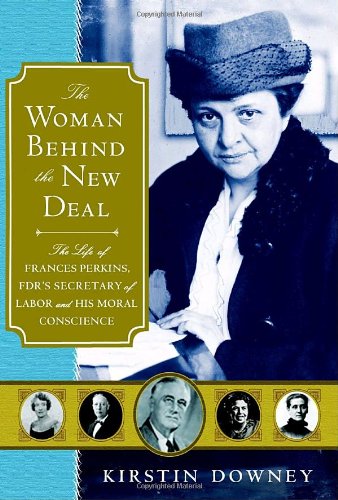
The Woman Behind the New Deal (Book Review)

Cover of "The Woman Behind the New Deal: ...

Title: The Woman Behind the New Deal: The Life of Frances Perkins, FDR’s Secretary of Labor and His Moral Conscience
Author: Kristin Downey
Pages: 480 Pages (Hardcover)
Published: 2009

One Sentence Review: Kristin Downey paints a picture in this terrific biography that looks at one of the most influential forgotten figures of the 20th century.

President Franklin D. Roosevelt is the face and name people remember when the New Deal is mentioned, but Frances Perkins is the heart and soul of the New Deal. Despite considerable personal household and financial problems, her fight to improve living standards for all Americans is an inspiring story. It’s certainly worth one worth remembering. Born Fannie Coralie Perkins, her life can be defined as one for social advocacy.

Her advocacy became all the more important after being a witness to the terrible Triangle Shirtwaist Fire in New York. Women and some men who worked in terrible conditions were forced to either die because of the flames or die jumping from high off the building in order to escape the flames. Frances Perkins made allies out of some of the most interesting figures or institutions, including the infamous Tammany Hall and President Theodore “Teddy” Roosevelt. The ally that would end up most defining her own work and America is President Franklin D. Roosevelt.

Frances Perkins fought for unemployment compensation when it didn’t exist. She fought for child labors in order to protect children who in many cases were forced to work in factories at the age of ten and were unable to get a education because of it. She fought for a forty-hour workweek, something that is sometimes forgotten didn’t always existed. She was the first female Cabinet secretary, living in a political world where the majority of men (but not Roosevelt) looked down at her and her ideas simply because of her gender. However, she was able to overcome these obstacles in order to become arguably the most important Secretary of Labor in this country’s history.

At the height of the Great Depression when FDR took office, it was Frances Perkins among others who fought for the public works programs that helped put millions of Americans back to work. Also worth mentioning is her time spent as head of the Immigration Service as Secretary of Labor. Her fight to bring European refugees (especially German Jews) to the United States at the dawn of Hitler’s reign is courageous considering how unpopular it was amongst many people. Especially since she was risking her job when she needed it most.

It’s fascinating to watch her push for a National Health Insurance program, over seventy years before the United States finally implemented one to a certain extent. Her finest moment of all her accomplishments was arguably the creation of Social Security. The same Social Security (although criticized today) helped lifted millions of elderly people out of poverty and has helped countless generations.

Overall, The Woman Behind the New Deal is a look at one of the most interesting women of the 20th century. Her accomplishments and drive helped changed the United States for the better. Her biography by Kristin Downey is well-detailed and most certainly worth reading.

I’d give The Woman Behind the New Deal: The Life of Frances Perkins, FDR’s Secretary of Labor and His Moral Conscience by Kristin Downey 5 out of 5 stars.

Author Note: If you’re interested in future posts, be sure to follow on WordPress, Facebook, or Twitter.

Review: Batman and Robin #18 – 23 (Five Stages of Grief Arc)

BM_NTW_Cv23_R1_08uu47sqc6_

Spoilers for Batman and Robin #18 through Batman and Nightwing #23 (formerly known as Batman and Robin) are contained in this review.

Scott Snyder’s run on Batman and Grant Morrison wrapping up his own run on Batman with Batman Incorporated have left Peter Tomasi’s run on Batman and Robin in the New 52 almost criminally underrated at times. The initial issues saw Bruce and Damian’s relationship develop as father and son, I admit I even grew to love the newest Robin after a period of time. Unfortunately, all things must pass and Damian met his demise in an issue of Batman Incorporated. This has led to what is arguably the greatest six issue run in not only the entire New 52 but in comics the last twelve months.

Tomasi wrote arguably his greatest issue of the New 52 with Batman and Robin #18, the requiem issue. The more impressive thing about that particular issue is that he and artist Patrick Gleason did such a wonderful job without using any words. It’s worth picking up on that basis alone. I can think of only a few comics that come close to having the same level of emotional impact and payoff for the reader. This led to the arc that has become known as the “Five Stages of Grief”, where essentially the next five issues are Batman going through each stage of one of the five stages of grief. The concept to take the book this direction was simply genius. The book would now take up the name of Batman And… of whoever is being featured.

Batman and Red Robin #19 saw the first issue (Denial) bring a number of surprises. It’s important to keep in mind that DC Comics that month had WTF side covers that would surprise readers similar to the comics of old. I know I was certainly not expecting Carrie Kelley, yes that Carrie Kelley to show up. I thought the inclusion of Frankenstein (a much underutilized character in the New 52 even if he is in Justice League Dark) was excellent as well. Despite Red Robin’s attempted at helping Bruce, one can feel the grief and rage resonating off the pages as Bruce is in anguish at the loss of his son.

Batman and Red Hood #20 saw the second issue (Rage) bring perhaps the most raw emotions of the entire arc. The reader is treated with Bruce’s spiral down a dark path interspersed with us learning more about Carrie Kelley and her friendship with Damian. One can quickly see how irrational that Batman is acting throughout the issue, which is only further made complicated with his desperation in continuing to try and bring back Damian. I thought Tomasi created a great scene when he had Batman bring Red Hood (Jason Todd) to the place where he died at the hands of the Joker and certainly creates a powerful scene between the two.

Before I move on with talking about Batman and Batgirl #21 (bargaining), one needs to look at this great cover. It’s one of my favorite covers of the New 52 and love the amount of symbolism it projects. The issue itself does a wonderful job of connecting the story going on alongside what’s currently going on in Batgirl’s own arc. Tomasi does a wonderful job of creating a wonderful issue, especially by having Batgirl provide the narration and seeing things from her point of view. It lets the reader be free of the bias of simply seeing things from Bruce’s point of view and allows us to see just how far his descent has gone.

The dialogue between Bruce and Barbara towards the end of the issue in the Batcave is some great stuff. I particularly love Barbara’s line “There is nothing for you to bargain with except your own pain, Bruce, and that’s only going to take you someplace darker.” One can’t help but sympathize with Barbara as she fails to try and get through to Bruce. I thought her offer to become Robin despite her own misgivings was touching and fantastically in line with the characterizations going on in her own book.

Batman and Catwoman #22 (depression) particularly showcased some of Gleason’s artistic talents as you can clearly see the physical changes in Bruce’s appearances. He looks more haggard and worse for wear. He looks like a man who’s gone through a great deal of grief and hasn’t reached the end of the line yet. It’s interesting to watch the interactions between Bruce and Carrie Kelley, I’m particularly curious if she’s going to end up being Robin down the road or at least some member of the Bat family.

Readers who have read Batman and Robin from the beginning will be treated to a nice reference to an earlier issue as Bruce listens to old tapes in the Batcave. I thought Tomasi did a great job in his team-up of Bruce and Selina in this issue. This particular panel made the issue for me. Also worth mentioning is the great teaser and slow build of Two-Face inclusion into the book.

Batman and Nightwing #23 (acceptance) is fitting due to it’s inclusion of Dick Grayson (Nightwing), Batman’s first son in the issue. The reader gets to see as Bruce attempts to keep trying to save Damian in his extremely real seeming simulation program. Alfred brings Nightwing into town to try and talk some sense into Bruce, instead he ends up joining Bruce in the simulation. The two are finally able to save him, and there is a wonderful conversation between the two towards the end of the issue.

The most important line of the issue that gives the reader a look into how Bruce feels has to be “I may have to live with Damian’s death, but I don’t ever have to accept it.” The most touching moment of the issue comes at the very end though, and it is provided by Alfred. He uses the simulation, and the reader is treated to his conversation with Damian from a previous issue when he escaped the Batcave of his death. In this simulation, Alfred tricks him and stops him from leaving. “I’ll never forgive myelf for letting you leave the cave that night”.

The last page of the issue remains the best of all. Bruce shows up, seeing everything that Alfred sees in the simulation and finally comes to an important realization. “I’m the one who’s sorry for not seeing how deep your pain goes, Alfred. I was too selfish to realize we both lost a son.” It is an important moment in Bruce’s growth as a character in the arc and coming to terms with Damian’s death that he recognizes the grief of others (as the reader also gets to see it at the same time). The arc is very much the five stages of grief for the reader who by the end of the arc will I believe come to better terms with Damian’s death, especially due to Tomasi’s masterful storytelling.

Overall, the five stages of grief arc has become one of my favorite Batman stories of all time and I hope it will be remembered as such. This is the kind of arc that doesn’t always come around too often, and when it does it often lacks the emotional depth and impact that this arc had. If you’re reading this review and haven’t read the issues yourself, do yourself a favor and pick them up. I’m extremely looking forward to seeing what Tomasi is going to do next involving Two-Face in the next arc.

Why You Should Be Reading The Superior Foes of Spider-Man

Superior_Foes_of_Spider-Man_Vol_1_1_Textless

The Superior Foes of Spider-Man is one of those comics that people may avoid due to feeling that Marvel is simply trying to cash in on the success of Superior Spider-Man, however, the comic is much more than that. Superior Foes of Spider-Man is in the same vein as another Marvel title, Hawkeye. We get to learn more about the new Sinister Six as they go about their daily regular lives (spoiler: it’s doesn’t go very well) and attempting to pull off capers despite Spider-Man’s existence. As someone who typically sticks to DC (my wallet can only handle so much), this was the first comic from Marvel outside of Hawkeye to make it onto my pull list. It’s a great time to start reading as well since there are currently only two issues published.

The lineup of the Sinister Six in this book are Boomerang, Shocker, Overdrive, Speed Demon, and Beetle (yes, there are only five of them). Not exactly an A-List lineup for those familiar with Spider-Man from most other mediums, but it works great nevertheless. IIn the first issue, the reader is introduced to Fred Myers, otherwise known as Boomerang who provides the narration. We get to learn how he became Boomerang in both an effective and hilarious couple of pages. The issue itself is funny and an entertaining read at the same time. One actually ends up sympathizing with some of the members of the Sinister Six. Their attempts at robbery to say the least aren’t very good.

Issue two continues the strong writing and art of the first issue. Watching Boomerang attempt to run the Sinister Six is great but arguably the best part of the issue comes when he’s dealing with his lawyer. The entire group play extremely well off one another, making the book definitely something worth reading.

Some may complain that Nick Spencer is trying too hard as a writer at times with the humor, but I think the vast majority of the jokes work perfectly. He’s also able to mix a good number of serious moments within the humor so the characters don’t just become completely jokey. I definitely have to say Spencer’s ability to make me sympathize with some of the characters in their failed adventures (especially Boomerang) is evidence of his writing ability. On a related note, Steve Lieber’s art is also wonderful and it really is the small things he does that end up making the art wonderful to see.

Overall, The Superior Foes of Spider-Man is a great read and certainly at least worth picking up for a few issues. The humor has been effective thus far and I hope that continues to be the case. I think Marvel may have struck gold by making a book similar to Hawkeye, but with villains.

Alpha (Book Review)

greg-rucka-jad-bell-novel-hc-book-01-alpha

Title: Alpha
Author: Greg Rucka
Pages: 292 Pages (Hardcover)
Published: 2012

One Sentence Review: Greg Rucka’s latest novel is a fantastic thriller that will leave you unable to put the book down once the action gets going.

As someone who throughly reads comics, Greg Rucka has always been one of my favorite writers. His work in Gotham Central is legendary, as is work with Batman: No Man’s Land and Batman: Detective Comics. He’s currently doing some wonderful work with Lazarus, which is being printed by Image Comics. All of that being said, I recently found out through my local library that he also had written several novels, and his literary fiction does not disappoint either.

Alpha tells the story of Jonathan “Jad” Bell, an undercover Delta Force operator and also Master Sergeant. His latest mission? Acting as Wilsonville’s lead undercover officer. Wilsonville also happens to be the largest theme park in the world (take that Disney). Everything is not all fun and smiles however at Wilsonville.

The park is suddenly endangered with the threat of a dirty bomb, leaving Jad to solve what’s going on. He will have to use all of his training and smarts if he’s going to outsmart and outwit the group that threatens to kill hundreds of thousands.

Alpha has a solid plot that’s both entertaining and will keep you turning the page. There are a couple of times in the book that my suspension of disbelief came into question, but overall the book remains believable. Rucka particularly excels with the fight scenes during the book, and the action scenes are where the book shines most. The book itself isn’t particularly long (almost 300 pages) and can be read in an single afternoon, although that isn’t a bad thing.

The supporting characters for Alpha ranges but overall are good. The villains are an interesting group, and are sometimes even more interesting than Jad. The usage of Wilsonville as the setting is certainly something different, but Rucka is able to pull it off. It adds an additional layer to the story, especially in a place that is typically associated with fun and excitement.

Overall, Alpha is an extremely enjoyable action thriller book. Rucka is a wonderful writer and doesn’t disappoint here. Fans of his comic work should do themselves a favor and give this book a chance like I did. I know I’ll certainly be looking to read some of his other novel works now.

I’d give Alpha by Greg Rucka 4 out of 5 stars. The book is currently for sale on Amazon.

Author Note: If you’re interested in future posts, be sure to follow on WordPress, Facebook, or Twitter.

The Girls of Atomic City: The Untold Story of the Women Who Helped Win World War II (Book Review)

9781451617528_custom-0278bcbabcf7f54dad74a6d52fbf7a85fd0fe873-s6-c30

Title: The Girls of Atomic City: The Untold Story of the Women Who Helped Win World War II
Author: Denise Kiernan
Pages: 400 Pages (Hardcover)
Published: 2013

Weapons don’t build themselves, much less nuclear ones. Much (deserved) attention has gone to the scientists who helped build the atomic bombs in the 1940’s that ultimately brought the end of World War II. However, the atomic bombs required a great deal of materials, especially refined materials that was partially left to the individuals of Oak Ridge, Tennessee. It’s worth noting that Oak Ridge, Tennessee didn’t even exist in 1941. It was a city built from nothing in 1942, one of the Manhattan Project’s secret cities. In The Girls of Atomic City, author Denise Kiernan explores the stories of some of the women of Oak Ridge, Tennessee.

The Girls of Atomic City mainly follows nine different women, who despite their various backgrounds and educations found themselves in Oak Ridge. The women’s stories were compiled by the author with interviews of the women who were still alive when the book was being written and their families. The book follows the women as they arrive at Oak Ridge, unsure at first where they are, unsure what to expect and in some cases what they’re even going to doing there. All they know is they were told that their efforts were going to help win the war. In some cases, the women there know nobody and for many of them it’s their first real time away from home and their families.

To say that Oak Ridge had tough security would be an understatement. The women and their families lived daily under a veil of secrecy, being unable to discuss their work with anyone around them. Imagine for a moment being unable to discuss your work with your own husband at the risk of losing your jobs due to the high level of secrecy. This was Oak Ridge, Tennessee, the place that helped build the atomic bombs.

The book also takes the time to mention other women of note, including Ida Noddack. Ida Noddack is worth mentioning since she suggested the possibility of fission years before its discovery, and was even mocked by many in the scientific community for suggesting its existence. The book also takes the time to mention some of the event involving women that ultimately led to the building of the atomic bomb, and some of the other individuals involved including General Leslie Groves.

It’s worth remembering the time period while reading The Girls of Atomic City. The women who worked in Oak Ridge, Tennessee were paid less in comparison to their male counterparts for the same work. Some of them couldn’t live in the same place at Oak Ridge as their husbands due to the color of their skin. Despite all of this, the women worked each day because they were told their work would help bring an end to the war. And it did.

Overall, The Girls of Atomic City brings the reader a fascinating part of American history first hand from the women themselves who worked there. Author Denise Kiernan does a wonderful job of relaying these women stories and does a fine job editing the book. This book is certainly worth reading.

I’d give The Girls of Atomic City: The Untold Story of the Women Who Helped Win World War II by Denise Kiernan 4 out of 5 stars. The book is currently for sale on Amazon.

Author Note: If you’re interested in future posts, be sure to follow on WordPress, Facebook, or Twitter.

Robert Kennedy: His Life (Book Review)

Robert F. Kennedy, Cabinet Room, White House, ...

Title: Robert Kennedy: His Life
Author: Evan Thomas
Pages: 512 Pages (Paperback)
Published: 2002

He was the “runt”, the Kennedy son whose own family didn’t think he was going to amount to much. For much of his life, he resided in his older brothers’s shadows. When he was finally able to step out of their shadows, he was tragically struck down. His life read like a Shakespeare play or Greek tragedy that he found himself relating to. To some, he was a hero who was going to change America and to others he was a villain. Robert Francis Kennedy or “Bobby” is a complex figure whose unfinished Presidential run in 1968 left many Americans even today asking “what if?” and his life is a fascinating tale as written about in this biography by author Evan Thomas

Author Evan Thomas’s biography of Robert Kennedy is a comprehensive look at his life. Thomas shows the reader how Bobby was initially ignored by his own family, instead his older brothers getting the attention. Thomas also shows how Bobby’s childhood eventually shaping his personality for the rest of his life and how it let him easily relate to those who felt they were ignored or downtrodden. The book shows Bobby’s “rise” in the family with the tragic death of his older brother Joe Jr. during World War II.

Bobby was an interesting figure as he grew into his role as protector of the Kennedy family, especially of his older brother John. Thomas does a wonderful job detailing Bobby’s time as Attorney General after his brother’s victory for the Presidency. Bobby very much became a “consigliere” or advisor as sorts to his older brother, especially after the failed CIA Bay of Pigs operation. Thomas paints a picture of a complex RFK, a man who earned his ruthless reputation during the 50’s, his time as his brother’s campaign manager, and then during his time as Attorney General. However, this is the same man who did a great deal of selfless acts, and grew towards the end of his tenure as Attorney General.

Thomas goes into Bobby’s arguably finest hour as a public servant, his actions during the thirteen days known as the Cuban Missile Crisis. It’s almost haunting to read the latter half of the book after the assassination of JFK, knowing RFK’s fate to come. However, RFK’s five year period after his brother’s death until his own death in 1968 can largely be considered inspiring. Although haunted by his brother’s death (and his own role in perhaps causing it), Bobby pushed on. His fight to rid the world of poverty and injustice gives the reader the picture of the man who makes up the legend today.

His visit to South Africa in 1966 when he gave the Day of Affirmation speech about injustice in a time when it was ruled by Apartheid is worth mentioning. As is his moral courage in deciding to run for Presidency in ’68 despite his brother being cut down by an assassin, and especially his decision to continue after the assassination of Martin Luther King Jr, in 68. His speech the night of MLK Jr’s death in Indianapolis, which arguably prevented rioting while most other major cities suffered from rioting is worth mentioning. He made that speech despite being told he shouldn’t go into the area, lest he’d be risking his own life.

For me, the defining moment of His Life and Bobby Kennedy comes towards the end of the book. In 1968, he traveled to rural Mississippi as a member of the Senator and saw the appalling conditions that the people had to live in there. Robert Kennedy was so affected by his visit there, he grabbed one of his aides and said: “You don’t know what I saw! I have done nothing in my life! Everything I have done was a waste! Everything I have done was worthless!”

Overall, His Life is a fair assessment of Robert Kennedy’s life. It’s not afraid to show when Bobby committed ruthless acts but it also showed him at his finest. He was a complex figure, but ultimately he was a man who transformed towards the end of his life. His life is certainly a story worth reading.

I’d give Robert Kennedy: His Life by Evan Thomas 5 out of 5 stars.

Author Note: If you’re interested in future posts, be sure to follow on WordPress, Facebook, or Twitter.

How The Beatles Destroyed Rock ‘N’ Roll: An Alternative History of American Popular Music (Book Review)

art6774widea

Title: How The Beatles Destroyed Rock ‘N’ Roll: An Alternative History of American Popular Music
Author: Elijah Wald
Pages: 323 Pages (Hardcover)
Published: 2009

This book from author Elijah Wald has an intentionally outrageous title, but thankfully there’s a great deal of depth beyond it. Wald challenges the assumptions of what we consider the popular music of each era to be and he explains his theories of why this is the case. Musicians like Benny Goodman, Frank Sinatra, Elvis Presley, Duke Ellington are all mentioned, but it’s musicians like Paul Whiteman, Harry Belafonte, Guy Lombardo, and the Shirelles who are the real stars of this book. It’s fascinating to read about the early history of popular music, and the various amount of changes we’ve seen in the past century.

Wald explores the changing in music from ragtime to jazz to swing (and back to jazz) and then finally before we arrive at Rock ‘N’ Roll. It’s fascinating for anyone who enjoys to read about how our basic expectations of music (radio, records, etc) were at one time not only non-existent but how much their arrival was criticized. It’s also interesting to see the changes in music from being something that your average person (or journeyman) would pick up an instrument versus the specialization that music quickly became. The book has interesting tidbits on every page about the evolvement of the music industry into what it is today.

Wald makes an interesting point that often goes underlooked when it comes to music criticism and history, the vast majority of those critics or historians are male. This can certainly lead to a one-sided point of view of music, especially since (according to Wald) the individuals who filled up the clubs during music history were female. This is only one of the aspects of American popular music that Wald examines, challenges, and comes to a well-researched conclusion about. As someone who throughly enjoys jazz, his discussion about the popularity of Paul Whiteman (who at one point was even dubbed the “King of Jazz”) in his own era versus his lack of attention today is a fantastic point.

Wald also does a fantastic job of comparing the similarities between the rise of jazz in the 1920’s and the rise of rock ‘n’ roll in the 1960s. It’s an interesting point that white people arriving late to the jazz scene who ended up ultimately receiving credit for the foundation that African Americans built before them were criticized, but the white people who arrived late to the rock ‘n’ roll scene who ended up ultimately receiving credit for rock ‘n’ roll were not criticized instead were lauded. Those looking for Beatles bashing will unfortunately have to look elsewhere, as even Wald says he is a Beatles fan. In fact, The Beatles are only a main focal point in the last chapter. So why the title then you’re probably wondering?

Wald’s main point in this book is that The Beatles (and the movement they brought along with them) were the death blow to the form of Rock ‘N’ Roll that existed at the time period. Wald laments how rock distanced itself from contemporary (Motown) black music, instead embracing older black music (blues) because it resulted in rock ‘n’ roll (and music with it) becoming more segregated. This can later be seen in the rise of disco, and particularly with hip hop.

Overall, How The Beatles Destroyed Rock ‘N’ Roll makes some wonderfully researched observations. It certainly made me think as someone who considers himself a huge fan of both rock ‘n’ roll and jazz particularly. However, I think fans of all music genres will find something to enjoy about this book. My only real particular gripe with the book is that its style can sometimes be a bit dry, but luckily the book is not long enough where it would become a major issue. Anyone who considers themselves a fan of music should consider picking up this book, if only to discover its conclusions, and make their own.

I’d give How The Beatles Destroyed Rock ‘N’ Roll: An Alternative History of American Popular Music 4 out of 5 stars.

Author Note: If you’re interested in future posts, be sure to follow on WordPress, Facebook, or Twitter.